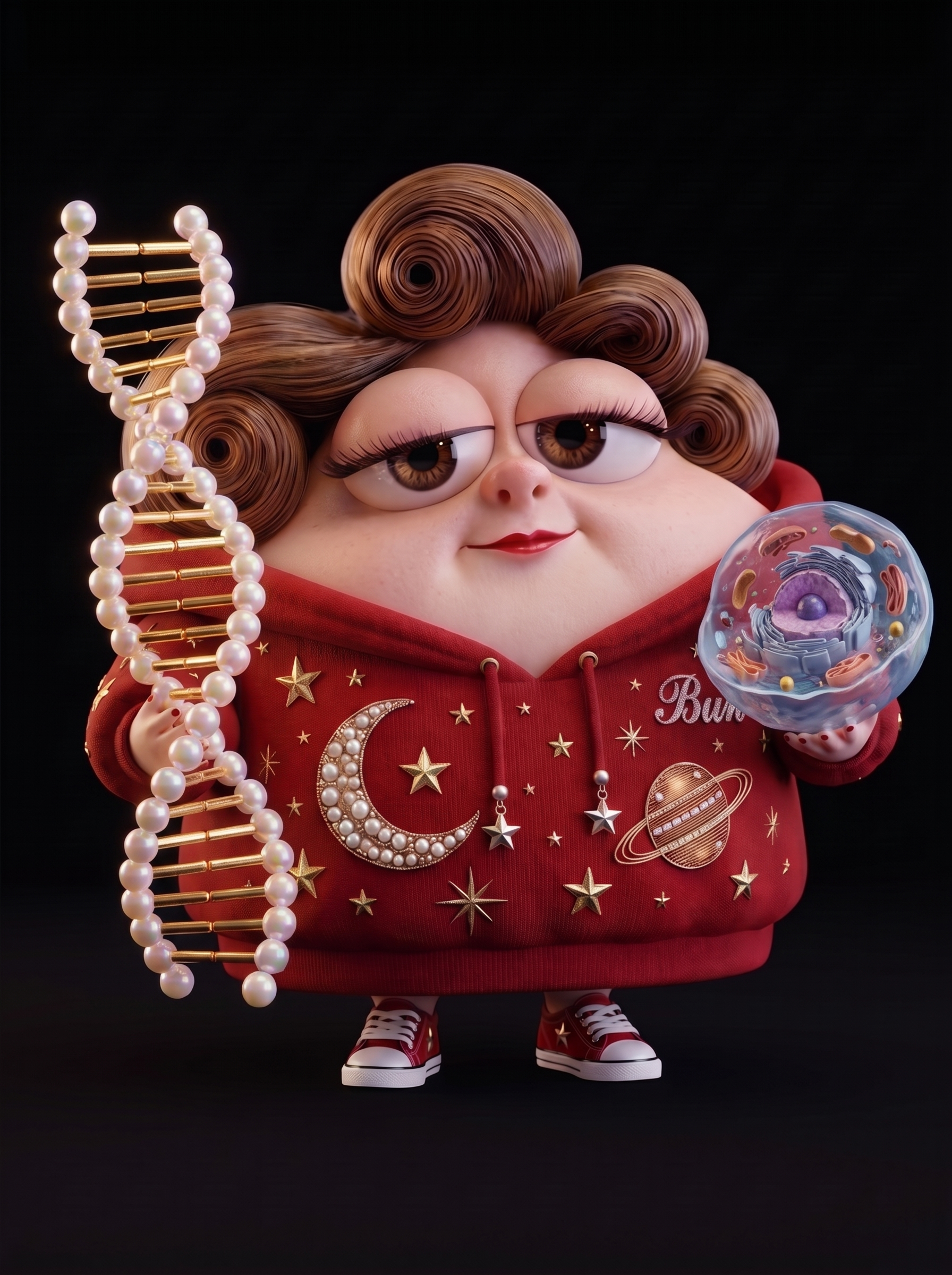
DNA, CELLS & THE FUTURE HUMAN
What life is made of, how biology is becoming editable, and where AI enters the story
Research edition · 12 October 2026
START HERE
Life is not software. But it is information-rich enough that the comparison is becoming hard to ignore.
A human body begins as one cell and becomes tens of trillions of cells arranged into tissues, organs and systems. Each cell is a chemical machine, but also an information-processing system: it reads DNA, responds to signals, repairs damage, makes proteins, communicates with neighbors and decides when to divide, specialize or die. For most of history, people could observe these processes but could not read them in detail, much less change them deliberately. That is what is different now.
Genomics can read the letters of DNA. Gene editing can alter selected letters. Stem-cell biology can replace certain lost cell types. Epigenetic reprogramming is beginning to test whether some aged cells can be pushed toward more youthful patterns of gene activity. Synthetic biology can give cells new instructions. And artificial intelligence is increasingly used to search the enormous spaces of sequences, proteins, molecules and cellular states that no human team could examine one by one.
This does not mean that the human body has become a programmable computer, that aging has been solved, or that a damaged arm can be regrown on demand. Biology remains messy, contextual and physical. Every promising idea still has to survive delivery problems, immune reactions, unintended effects, manufacturing, clinical trials and the inconvenient fact that living systems refuse to behave like neat diagrams. But the direction of travel is real: parts of biology are becoming more readable, more measurable and, in carefully chosen settings, more editable.
THE SHORTEST MAP
DNA stores biological information. Genes are functional regions within that DNA. The genome is the full DNA collection. Cells read and act on that information. Aging is what happens when many repair, control and communication systems gradually lose precision. Modern biotechnology is learning to intervene at several of those layers at once.
THE INFORMATION LAYER
1. What is DNA?
DNA — deoxyribonucleic acid — is the molecule cells use to store a large part of the information needed to build, maintain and reproduce living organisms. Its familiar double helix is made from two paired strands. Along those strands are four chemical bases — A, T, C and G — whose order carries biological information. In the human genome, that sequence spans roughly three billion base pairs in one set of chromosomes. [1]
The useful metaphor is a library rather than a single blueprint. DNA contains recipes for proteins, regulatory instructions that control when those recipes are used, repeated regions, structural sequences and many elements whose functions are still being refined. Most of the DNA in a human cell does not directly code for a protein. The important point is that the sequence is not passive: cells continuously read selected regions, copy information into RNA and use that information to make molecules that perform work.
DNA is also not destiny. A DNA sequence creates possibilities and constraints, but what happens in a living body depends on which genes are active, which cells are involved, the surrounding tissue, developmental history, environment, random events and time. Two cells can contain essentially the same genome and behave completely differently because they are reading different parts of it.
PLAIN-ENGLISH VERSION
DNA is the long-term information archive. It does not run the body by itself; cells interpret it, regulate it and respond to the world around them.
2. What is a gene — and what is a genome?
A gene is a functional region of DNA. Many genes contain the instructions for making a protein; others produce functional RNA molecules instead. Humans have about 20,000 protein-coding genes, but those genes occupy only a small fraction of the genome. [2]
The genome is the entire DNA collection found in a cell: all the genes plus the regulatory and non-coding DNA around them. In humans, the nuclear genome is organized into 23 pairs of chromosomes, and mitochondria carry a small additional genome of their own. [3] If a gene is one recipe, the genome is the cookbook, the index, the notes in the margins, the switches that decide which recipes may be opened, and a surprisingly large amount of material we are still learning how to interpret.
That distinction matters because many traits and diseases cannot be reduced to one gene. Some disorders are caused mainly by a single damaging variant. Others emerge from hundreds or thousands of variants interacting with development, environment, age and chance. Modern medicine increasingly studies patterns across the whole genome rather than hunting for one “gene for” a complicated human trait.
THE LIVING MACHINE
3. What is a cell?
A cell is the basic living unit of the body. It is bounded by a membrane, contains molecular machinery, uses energy, senses its environment and carries out the chemistry required to stay alive. Human cells come in radically different forms — a neuron, a muscle fiber, an immune cell and a skin cell are all cells — but they share a common molecular toolkit.
Inside a typical human cell, the nucleus stores most of the DNA. Ribosomes build proteins. Mitochondria help convert nutrients into ATP, the cell’s immediate energy currency. Membranes create compartments and control what enters and leaves. A dense network of proteins and RNA molecules continually carries messages, checks damage and coordinates activity. What looks like a quiet microscopic bubble is closer to a city operating on chemistry.
The remarkable part is specialization. Most cells contain nearly the same genome, yet a neuron maintains electrical signaling while a liver cell handles metabolism. The difference lies largely in gene regulation: each cell type keeps some genetic programs accessible and others quiet. Biology therefore depends not just on the DNA sequence, but on how that sequence is used.
4. Why do cells die?
Cell death is not automatically a failure. Multicellular life depends on removing cells that are damaged, dangerous or no longer needed. During programmed cell death, or apoptosis, a cell activates a controlled molecular sequence that dismantles it and allows surrounding tissue to clear the remains. This is one way the body eliminates abnormal cells; when cancer cells evade these programs, survival itself becomes part of the problem. [4]
Cells can also die because injury overwhelms them — for example through severe loss of oxygen, toxins, infection or physical damage. Other regulated death programs exist as well, especially in immunity and inflammation. And there is a third fate that matters greatly for aging: senescence. A senescent cell is not dead. It has usually stopped dividing, remains metabolically active, and can release signals that alter nearby tissue.
This gives biology an uncomfortable trade-off. A damaged cell that refuses to die can be dangerous. A cell that dies too easily can damage a tissue. A senescent cell can help wound healing or suppress tumors in one context, yet become inflammatory when it accumulates with age. The goal is not “keep every cell alive.” The goal is maintain the right cells, in the right state, at the right time.
WHY THE SYSTEM DRIFTS
5. Why do we age?
There is no single aging switch. The best current picture is a network of interacting failures that accumulate over time. A widely used framework describes twelve “hallmarks of aging,” including DNA instability, telomere attrition, epigenetic changes, loss of protein quality control, impaired autophagy, altered nutrient sensing, mitochondrial dysfunction, cellular senescence, stem-cell exhaustion, disrupted communication between cells, chronic inflammation and changes in the microbiome. [5]
These processes feed one another. Damaged mitochondria can increase cellular stress. Stress can damage proteins and DNA. Repair systems become less reliable. Stem cells can lose regenerative capacity. Senescent cells can accumulate and change the local environment. Epigenetic control becomes less precise, so cells may express genes at the wrong levels or lose some of the identity that makes them function well. Aging is therefore less like one clock running down and more like a maintenance network gradually losing coordination.
In 2026, large-scale work is making that map more detailed. An NIH-supported effort produced a major atlas of senescent cells across human tissues, showing that senescence is not one uniform state but a collection of cell-type-specific states. Other work integrating more than 11,000 transcriptomes across mammals found conserved gene-expression signatures associated with age, mortality and rejuvenation interventions. [15][25] The field is becoming better at measuring biological aging — but measurement is not yet the same thing as proving that an intervention makes humans live longer.
IMPORTANT DISTINCTION
A biomarker can move without proving that lifespan or healthspan has improved. In 2026, researchers are testing which epigenetic and multi-omic “aging clocks” are reliable enough to use in clinical trials. They are promising tools, not magical countdowns. [14]
6. Why can’t we regrow an arm?
Some animals can. Salamanders can form a blastema — a mass of proliferating cells at the injury site — and rebuild muscle, bone, nerves, blood vessels and skin in the correct pattern. Adult humans do not normally form a comparable limb-regenerating blastema. Our injury response is excellent at closing wounds quickly, fighting infection and stabilizing damaged tissue, but it tends toward repair and scarring rather than recreating an entire missing structure. [6]
An arm is also not one tissue. To regenerate it, the body would need to recreate a three-dimensional map; produce the correct proportions of bone, tendon, vessels, nerves, muscle and skin; reconnect the new structure to the spinal cord and circulation; preserve positional information so a hand forms at the end rather than another elbow; and know when to stop growing. That requires coordination across many systems that adult human biology no longer activates in the way a salamander does.
Humans are not incapable of regeneration. Skin renews. Blood is continually replaced. The liver can restore mass after partial loss. Bone heals. But regenerative capacity varies enormously by tissue. The practical frontier is therefore not “grow an arm tomorrow.” It is to learn how to replace particular lost cell types, coax tissues to repair better, reduce scarring and eventually coordinate larger-scale regeneration.
READABLE BECOMES WRITABLE
7. Can DNA actually be changed?
Yes. DNA changes naturally all the time through mutation, replication errors and damage. Modern biotechnology can also change selected DNA deliberately. The key distinction is where the edit happens. A somatic edit changes cells in the treated person and is not intended to be inherited by future children. A heritable edit would alter eggs, sperm or embryos in a way that could pass the change to later generations. The latter raises much greater scientific and ethical concerns and is not considered ready for reproductive clinical use by major international guidance. [10]
Another distinction is equally important: changing gene activity is not the same as changing the DNA sequence. Epigenetic regulation can make a gene easier or harder to read while leaving the underlying A, T, C and G sequence intact. This is one reason the phrase “DNA activation” is misleading. Cells do switch genes on and off, but the mechanism is regulated gene expression — not awakening mysterious unused DNA.
8. CRISPR: the first widely programmable genome editor
CRISPR began as part of a bacterial defense system. In the laboratory, scientists repurposed it into a programmable way to find a chosen DNA sequence. A guide RNA directs a CRISPR-associated protein such as Cas9 to the target. Cas9 can cut the DNA, and the cell’s own repair machinery then joins the break. Depending on how the system is designed, that repair can disrupt a gene or help introduce a desired change.
The phrase “molecular scissors” is useful, but incomplete. Cutting is only half the problem; what happens after the cut matters just as much. Cells can repair DNA imperfectly. The editor may reach the wrong cell, miss some cells, trigger immune reactions or occasionally edit unintended sites. Delivery — getting the editor into the correct tissue in the correct dose — remains one of the hardest engineering problems in gene medicine.
CRISPR is no longer only a laboratory technique. Casgevy, which edits a patient’s own blood-forming stem cells outside the body and returns them after treatment, became the first FDA-approved CRISPR-based therapy in 2023. In July 2026, the FDA expanded U.S. approval to patients as young as two years old with sickle cell disease or transfusion-dependent beta thalassemia. [7] That does not mean “CRISPR can fix anything.” It means genome editing has crossed the boundary from experimental possibility into regulated medicine for specific severe diseases.
Beyond cutting: base editing and prime editing
Newer editors try to make smaller changes with less disruption. Base editors chemically convert one DNA letter into another without making a full double-strand break. In 2026, a Phase 1 study of VERVE-102 reported that a single intravenous base-editing treatment aimed at the liver produced substantial, dose-dependent and sustained reductions in PCSK9 and LDL cholesterol in people with familial hypercholesterolemia or premature coronary disease. The study is early, but conceptually important: it points toward one-time editing for common cardiovascular risk, not only rare genetic disorders. [8]
Prime editing is even more flexible in principle: it combines a targeting system with a reverse-transcriptase mechanism that can write a specified sequence change at the target site. In June 2026, Prime Medicine received New Zealand authorization to begin a Phase 1/2 trial of an in-vivo prime editor for a common Wilson disease mutation. At the time of authorization, human outcome data were not yet available; initial clinical data were expected in 2027. [9] The field is moving fast, but “entered the clinic” and “proved effective” are very different milestones.
THE SEQUENCE IS NOT THE WHOLE STORY
9. Epigenetic reprogramming: can an old cell become younger without changing its DNA?
Epigenetics refers to regulatory systems that influence which genes are active without necessarily changing the DNA sequence itself. Chemical tags on DNA, modifications to histone proteins and the three-dimensional organization of chromosomes all help determine what parts of the genome a cell can read. During development, epigenetic programs help a skin cell remain a skin cell and a neuron remain a neuron. With age, that control becomes less precise. [11]
Reprogramming experiments showed that mature cells can be pushed back toward a pluripotent stem-cell state using transcription factors now associated with Shinya Yamanaka’s work. Full reprogramming erases much of a cell’s identity, which is useful for making induced pluripotent stem cells but dangerous as a rejuvenation therapy. Partial reprogramming tries to capture some youthful molecular features without returning a cell all the way to an embryonic-like state.
This crossed an important line in 2026. Life Biosciences began a first-in-human Phase 1 study of ER-100, an experimental eye therapy using controlled expression of OCT4, SOX2 and KLF4 — three reprogramming factors often shortened to OSK — in retinal ganglion cells. As of 8 October 2026, the company had reported interim data from only three glaucoma participants: the first dose level was tolerated through 56 days, and two participants showed preliminary improvements on visual-field measurements. [12][13] These are company-reported early Phase 1 observations from a tiny sample, not proof that human aging has been reversed. But they mark the first time partial epigenetic restoration has entered human testing.
WHY THIS IS SCIENTIFICALLY EXCITING
Gene editing changes the letters. Epigenetic reprogramming aims to change how the existing letters are read. If the approach proves safe and reproducible, some age-related dysfunction might be treated by restoring cellular state rather than replacing the DNA itself.
10. Longevity science: from “live forever” to “stay functional longer”
Serious longevity research is less about immortality than healthspan: delaying disease and preserving function for more of the years a person is alive. Researchers are studying nutrient-sensing pathways such as mTOR, senescent cells, mitochondrial function, inflammation, stem-cell exhaustion, immune aging and epigenetic regulation. Many interventions extend lifespan in laboratory animals. Far fewer have convincing evidence that they extend healthy human lifespan.
The field is also learning to measure aging more carefully. DNA-methylation clocks, transcriptomic signatures, proteomic clocks and other multi-omic markers can estimate aspects of biological age. A major 2026 Nature Medicine analysis harmonized 51 human intervention studies to test how consistently epigenetic clocks respond. The results were useful but also underscored the problem: different clocks can respond differently, and a change in a clock is not automatically equivalent to added years of healthy life. [14]
Senescent cells are one major target. These cells have stopped dividing but remain biologically active; some are useful for wound healing and tumor suppression, while persistent populations can contribute to chronic inflammation and tissue dysfunction. In June 2026 the NIH-supported SenNet consortium published the first broad atlas of senescent cells across human tissues, an infrastructure project intended to make future senolytic or senescence-modifying therapies more precise. [15]
The sober status in 2026 is therefore encouraging but unfinished. There is no single approved treatment that makes healthy humans biologically young again. Rapamycin, metformin, senolytics, metabolic drugs and other candidates remain areas of active investigation, but the human evidence is heterogeneous and often disease-specific or biomarker-based. The strongest near-term goal is not “age 20 forever.” It is to postpone dysfunction, repair specific age-related damage and make later life healthier.
REPLACING WHAT WAS LOST
11. Regeneration: when medicine starts rebuilding instead of only treating
Regenerative medicine combines stem cells, tissue engineering, biomaterials, gene control and transplantation to restore function that the body cannot recover on its own. The important conceptual shift is from “manage the symptoms of lost cells” to “replace or repair the lost cells themselves.” Several recent trials show what that can mean.
In type 1 diabetes, the immune system destroys pancreatic beta cells that produce insulin. A 2025 Phase 1/2 study of stem-cell-derived islet cells reported that all 14 evaluated participants showed graft function; among the 12 who received a full dose, 10 were insulin-independent at one year. The treatment still required immunosuppression, which carries real risks. [16] In 2026, a separate report described one patient whose genetically modified donor islets continued functioning for 14 months without immunosuppression — an intriguing single-patient result, not yet a general solution. [17]
The same replacement logic is being tested in the nervous system. In 2025, a Japanese Phase 1/2 study reported that transplanted iPSC-derived dopaminergic progenitors survived, produced dopamine and showed encouraging motor signals in a small group of people with Parkinson’s disease. [18] In July 2026, researchers reported a first-in-human study of iPSC-derived neural progenitor cells for subacute spinal-cord injury: four patients were followed for two to four years, with no tumors or graft-related adverse events and exploratory motor improvements that justify larger studies. [19]
These trials do not mean that whole organs or limbs are around the corner. They show something more concrete: it is becoming possible to manufacture specific human cell types, transplant them and recover functions that were previously considered permanently lost. Regeneration is likely to advance tissue by tissue before it advances body part by body part.
12. Synthetic biology: giving cells new instructions
Gene editing usually starts with an existing genome and changes it. Synthetic biology is broader: it treats biological systems as things that can be designed, assembled and controlled. Scientists can build gene circuits that act like logic gates, engineer cells to sense a disease signal and release a therapeutic molecule, or program immune cells to attack a target only when several conditions are met.
CAR-T cancer therapy is the most familiar example of a living cell being re-engineered into a medicine, but the next generation is becoming more sophisticated. A 2026 Nature Reviews Genetics review describes programmable cell therapies with genetic circuits, logic gates, externally triggered controls and built-in “kill switches” that can shut therapeutic cells down if necessary. [20] The long-term idea is not simply a drug that enters the body and disappears. It is a living therapeutic system that can sense, decide and respond.
Synthetic biology also raises a useful caution about the word “programmable.” Cells are not silicon chips. Genetic circuits sit inside environments full of immune signals, metabolism, mechanical stress and evolutionary pressure. The more complex the program, the more ways biology can surprise the designer. Programmable does not mean perfectly predictable.
WHEN BIOLOGY BECOMES A SEARCH PROBLEM
13. AI-designed medicine: what AI actually contributes
Biology contains search spaces too large for unaided human reasoning. A protein can have hundreds of amino acids; the number of possible sequences is astronomical. A chemical library can contain billions of candidate molecules. A single-cell experiment can measure thousands of genes across millions of cells. AI is useful because it can learn statistical structure inside these spaces, rank possibilities and generate candidates for experiments.
Structure prediction was the first spectacular demonstration. AlphaFold 3 extended earlier protein-folding systems to model complexes involving proteins, DNA, RNA, small molecules, ions and modified residues. [21] By 2026, generative protein design had moved from predicting nature toward proposing entirely new proteins, binders and assemblies. A Nature review described a field shifting from random search toward intentional computational design, while emphasizing that hard problems — especially catalytic function and dynamic molecular machines — remain. [22]
Drug discovery is beginning to show clinical evidence rather than only demos. Rentosertib, a small molecule whose target and compound design were developed using generative-AI methods, reached a randomized Phase 2a trial in idiopathic pulmonary fibrosis; results were published in Nature Medicine in 2025. [23] A major August 2026 review of AI drug discovery described this as one of the strongest proof points so far, while also noting that, as of that review, no AI-designed small molecule had yet received FDA marketing approval. [24]
AI is also moving into experimental design, clinical-trial planning and multimodal models that combine genomic, imaging and medical-record data. But the central bottleneck is increasingly obvious: language models can learn from much of the internet; biology has no equivalent complete dataset of every cell state, protein interaction and disease process. Models are only as reliable as their data and their experimental validation. In biology, prediction eventually has to meet a pipette.
A USEFUL MENTAL MODEL
AI does not “solve biology” by thinking harder. It compresses huge search spaces, proposes patterns or candidates, and helps decide what to test next. The laboratory — and ultimately the clinical trial — remains the reality check.
14. The frontier in October 2026: what is real now?
The last three years have moved several ideas from speculative conversation into human medicine. The safest way to understand the moment is to separate milestones from headlines.
Technology | Status in 2026 | What that actually means |
|---|---|---|
CRISPR editing | Approved medicine | Casgevy is FDA-approved for sickle cell disease and transfusion-dependent beta thalassemia; U.S. eligibility expanded to age 2+ in 2026. [7] |
Base editing | Early human trials | VERVE-102 produced substantial, sustained LDL reductions in a Phase 1 study. Larger safety and efficacy studies are still required. [8] |
Prime editing | Entering the clinic | A first in-vivo Prime Editing program for Wilson disease received clinical authorization in 2026; outcome data are not yet available. [9] |
Partial epigenetic reprogramming | First-in-human Phase 1 | ER-100 has early company-reported safety data in three glaucoma participants. This is a milestone, not proof of rejuvenation. [12][13] |
Stem-cell replacement | Early clinical restoration | Trials in type 1 diabetes, Parkinson’s disease and spinal-cord injury show that manufactured cells can survive and restore selected functions in some patients. [16][18][19] |
AI-designed medicine | Clinical proof-of-concept | AI-assisted drug and protein design has reached human trials and increasingly sophisticated design tasks, but clinical validation remains the bottleneck. [22][23][24] |
THE HUMAN QUESTION
15. What does all of this actually mean for humans?
The most important change is not one particular technology. It is the convergence of several abilities: we can read genomes cheaply, edit selected sequences, manufacture some cell types, measure thousands of molecular signals at once, engineer gene circuits and use AI to navigate biological search spaces. Medicine is beginning to move from describing disease toward manipulating mechanisms.
In the near term, that means treatments will remain specific. One edit for one disease. One engineered cell for one tissue. One reprogramming strategy for one organ. Biology does not surrender its complexity simply because our tools become powerful. The body is a network, and interventions that help one pathway can disturb another.
In the longer term, however, the categories may blur. Gene editing can correct inherited errors. Regenerative medicine can replace missing cell populations. Synthetic biology can add new functions. Epigenetic reprogramming may eventually restore more youthful cellular states. AI can help design the molecules and proteins that make those interventions possible. If these fields mature together, medicine could increasingly become preventive, restorative and personalized rather than reactive.
That future will also force harder questions. When does treatment become enhancement? If a safe intervention can preserve memory, muscle or fertility, is declining it still “natural”? Who gets access to one-time curative therapies that are expensive to manufacture? How much risk is acceptable when an edit could last for decades? The science is making some old limits negotiable; society still has to decide which negotiations are wise.
THE SENTENCE TO REMEMBER
Biology is becoming more readable, more writable and, in limited ways, more programmable — but it is not yet controllable in the way software is. The future will be built in the gap between those two facts.
16. What is established, what is emerging, and what is still speculative?
For a non-specialist, this distinction is more useful than memorizing every company name. Established biology includes DNA sequencing, gene-based diagnosis, many forms of gene therapy, stem-cell transplantation and a growing number of precision medicines. CRISPR has an approved therapeutic use. AI structure prediction is a real scientific tool. None of that requires believing in immortality or science fiction.
Emerging technologies include in-vivo base editing, prime editing, engineered immune and stem cells, organoid-guided medicine, epigenetic restoration and AI-generated therapeutic molecules. These have genuine data behind them, but much of the evidence is still early, condition-specific and based on small trials.
Still speculative are reliable whole-body age reversal, routine organ regeneration on demand, regrowing an adult human limb, safe enhancement of healthy people through germline editing, and a general “digital twin” that can predict every biological response. These are research directions or thought experiments, not services medicine can responsibly offer today.
That distinction is worth protecting because the field is exciting enough without exaggeration. The real achievements are already extraordinary: DNA can be read at massive scale, selected sequences can be changed, cells can be manufactured as medicines, and AI can design molecular candidates that would have been almost impossible to search manually. The honest story is not less interesting than the hype. It is more interesting, because it is actually happening.
CLOSING NOTE
17. The future is getting stranger — but it is also getting more understandable
A generation ago, the human genome had not been fully sequenced. CRISPR was not a medical tool. Induced pluripotent stem cells did not exist. Protein structure prediction at today’s scale seemed remote. Partial epigenetic reprogramming had not entered a human trial. The vocabulary of modern biotechnology is changing because the boundary between observing life and engineering parts of life is changing.
The next step is not to assume that every limit will disappear. It is to learn which limits are fundamental, which are temporary engineering problems and which should remain because removing them creates new risks. That requires biology, computation, medicine, ethics and something less glamorous but equally important: patience.
For humans, the practical message is simple. We are not becoming programmable organisms overnight. But we are entering a period in which disease, aging and regeneration can increasingly be discussed in molecular terms rather than only as fate. AI accelerates that shift by helping us search biological complexity. The laboratory decides whether the search result was real.
BIOLOGY WITH BUN
Aging is a problem. DNA is weird. Cells are busy. The future is getting stranger. Let’s learn it together.
RESEARCH CHECKED 12 OCTOBER 2026
Sources & further reading
The article prioritizes public scientific agencies, peer-reviewed journals, clinical-trial registries and regulatory sources. Company-reported findings are labeled as such in the text. Links were checked during research in October 2026.
[1] National Human Genome Research Institute (NHGRI), A Brief Guide to Genomics / DNA basics. Source
[2] NHGRI, Gene — Talking Glossary of Genomic and Genetic Terms. Source
[3] NHGRI, Genome — Talking Glossary of Genomic and Genetic Terms. Source
[4] National Cancer Institute, Programmed cell death (apoptosis). Source
[5] López-Otín C. et al., Hallmarks of aging: An expanding universe. Cell (2023). Source
[6] National Institute of General Medical Sciences, Regeneration. Source
[7] U.S. FDA, CASGEVY and 2026 approval expansion to patients aged 2 years and older. Source
[8] Vafai S.B. et al., In Vivo Base Editing of PCSK9 with VERVE-102 for Hypercholesterolemia. New England Journal of Medicine (2026). Source
[9] Prime Medicine, 2026 clinical-trial authorization for PM577a in Wilson disease. Source
[10] World Health Organization, Human genome editing — overview and governance recommendations. Source
[11] Yücel A.D. & Gladyshev V.N., Systemic epigenetic dysregulation as a driver of ageing and a therapeutic target. Nature Reviews Molecular Cell Biology (2026). Source
[12] ClinicalTrials.gov, NCT07290244 — ER-100 partial epigenetic reprogramming trial. Source
[13] Life Biosciences, first-in-human interim ER-100 data, 8 October 2026 (company-reported Phase 1 findings). Source
[14] Sehgal R. et al., Responsiveness of epigenetic aging biomarkers to longevity interventions in humans. Nature Medicine (2026). Source
[15] U.S. NIH, 2026 SenNet atlas and new framework for senescent cells in aging. Source
[16] Reichman T.W. et al., Stem Cell–Derived, Fully Differentiated Islets for Type 1 Diabetes. New England Journal of Medicine (2025). Source
[17] Carlsson P.-O. et al., Long-Term Survival of Hypoimmune Allogeneic Islets without Immunosuppression. New England Journal of Medicine (2026). Source
[18] Sawamoto N. et al., Phase I/II trial of iPS-cell-derived dopaminergic cells for Parkinson’s disease. Nature (2025). Source
[19] Sugai K. et al., An iPSC-derived neural progenitor cell therapy for subacute spinal cord injury. Nature Medicine (2026). Source
[20] Teixeira A.P. et al., Next-generation programmable cell therapies for precision medicine. Nature Reviews Genetics (2026). Source
[21] Abramson J. et al., Accurate structure prediction of biomolecular interactions with AlphaFold 3. Nature (2024). Source
[22] Yang W. et al., The past, present and future of de novo protein design. Nature (2026). Source
[23] A generative AI-discovered TNIK inhibitor for idiopathic pulmonary fibrosis: randomized phase 2a trial. Nature Medicine (2025). Source
[24] Bender A. et al., Artificial intelligence in drug discovery — what it is, where we stand and the path forward. Nature Reviews Drug Discovery (2026). Source
[25] Universal transcriptomic hallmarks of mammalian ageing and mortality. Nature (2026). Source
PUBLICATION NOTE
This document is educational, not medical advice. Early clinical findings can change as trials expand. “Promising” is not the same as “proven,” and treatments discussed here should not be interpreted as personal recommendations.
BunCosmos · AI Research Lab · Biology With Bun